TRIP TO DELHI AND AGRA


Delhi, the capital of India, has a rich history. The city is dotted with spellbinding mosques, forts, and monuments left over from the Mughal rulers that once occupied the city. The contrast between rambling Old Delhi and well planned New Delhi is immense, and it’s interesting to spend time exploring both. If you feel in need of some relaxation, just head to one of Delhi’s flourishing landscaped gardens.

Red Fort

Red Fort, Delhi.

Delhi’s most famous monument, the Red Fort, stands not only as a powerful reminder of the Mughal era India but also a symbol of India’s struggle for freedom. It was build by fifth Mughal emperor Shah Jahan, when he decided to shift his capital there from Agra in 1638. The fort’s turbulent history includes being captured by the Sikhs and the British. To take your imagination back to the ancient era, a one hour sound and light show of the fort’s history is held each evening.

  • Location: Opposite Chandni Chowk, Old Delhi.
  • Entry Cost: Foreigners, 500 rupees. Indians, 30 rupees. Free for children under 15 years.
  • Opening Hours: Sunrise until sunset. Closed Mondays. 

Jama Masjid

Jama Masjid, New Delhi

Jama Masjid is another marvelous treasure of the Old City, and it’s one of the largest mosque in India. Its courtyard can hold an incredible 25,000 devotees. The mosque took six years to build, and was completed in 1656. A strenuous climb to the top of its southern tower will reward you with a stunning view (albeit obscured by metal security grills) across the rooftops of Delhi. Be sure to dress appropriately when visiting the mosque or you won’t be allowed in. This means covering your head, legs and shoulders. Attire is available there.

  • Location: Opposite Chandni Chowk, Old Delhi. Near the Red Fort.

Chandni Chowk

Chandni Chowk, Delhi.

Chandni Chowk, the main street of old Delhi, is a shocking contrast to the wide, orderly streets of New Delhi. Cars, cycle rickshaws, hand-pulled carts, pedestrians, and animals all compete for space. It’s chaotic, crumbling and congested, but completely captivating as well. As one of the oldest and busiest markets in India, its narrow winding lanes are full of inexpensive jewelry, fabrics, and electronics. For the more adventurous, Chandni Chowk is an excellent place to sample some of Delhi’s street food. The renowned Karim Hotel, a Delhi dining institution, is also located there.

  • Location: Old Delhi, near the Red Fort and Jama Masjid.

Swaminarayan Akshardham

Temple, Akshardham, Delhi, India

A relatively new attraction, this massive temple complex was built by the BAPS Swaminarayan Sanstha spiritual organization and opened in 2005. It’s dedicated to showcasing Indian culture. As well as the astonishing architecture of the pink stone and white marble shrine, the complex includes sprawling garden, sculptures, and boat ride. Allow plenty of time to explore it thoroughly — at least half a day. Do note that cell phones and cameras are not permitted inside.

  • Location: National Highway 24, near Noida Mor, New Delhi.
  • Entry Cost: Free. However, tickets are required to view the exhibitions.
  • Opening Hours: 9.30 a.m. until 6.30 p.m. (last entry). Closed Mondays.

Qutab Minar

Qutub Minar complex.

Qutab Minar, the tallest brick minaret in the world, is an incredible example of early Indo–Islamic architecture. It was built in 1206, but the reason remains a mystery. Some believe that it was made to signify victory and the beginning of Muslim rule in India, while others say it was used to call the faithful to prayer. The tower has five distinct stories, and is covered with intricate carvings and verses from the holy Quran. There are also a number of other historic monuments on the site.

  • Location: Mehrauli, south Delhi.
  • Entry Cost: Foreigners, 500 rupees. Indians, 30 rupees. Free for children under 15 years.
  • Opening Hours: Sunrise until sunset, daily.

Gandhi Smriti and Raj Ghat

Gandhi Smitri, Delhi.

A visit to Gandhi Smriti will show you the exact spot where Mahatma Gandhi, affectionately referred to as the Father of the Nation, was assassinated on January 30, 1948. He lived in the house for 144 days up until the time of his death. The room that he slept in, kept exactly how he left it, and the prayer ground where he held a mass congregation every evening are both open to the public. Plenty of photos, sculptures, paintings, and inscriptions are also on display. You can also visit his memorial at Raj Ghat.

  • Location: 5 Tees January Marg, central New Delhi.
  • Entry Cost: Free.
  • Opening Hours: 10 a.m. to 5 p.m. Closed Mondays.

India Gate

India gate, New Delhi, India, Asia

VThe towering archway of India Gate at the center of New Delhi is a war memorial, built in memory of the Indian soldiers who lost their lives fighting for the British Army in World War I. At night it glows warmly under floodlights, and the gardens that line its boulevard are a popular place to enjoy a warm summer’s evening. There’s also a fun Children’s Park that’s ideal for kids.

  • Location: Rajpath, near Connaught Place, New Delhi.
  • Entry Cost: Free.
  • Opening Hours: Always open.

Bahai (Lotus) Temple

Lotus Temple, Delhi.

The Bahai Temple is commonly called the Lotus Temple, as it’s shaped like a lotus flower. It’s particularly pretty at night, when it’s attractively lit up. Made out of concrete covered in white marble, the temple belongs to the Bahai Faith, which proclaims the unity of all people and religions. Everybody is welcome there.

  • Location: Near Nehru Place, south Delhi.
  • Entry Cost: Free.
  • Opening Hours: 9.00 a.m. until sunset. Closed Mondays.
TRIP TO KUTCH

Kutch region has an impression of being a distinctive land. It is a region that differs in celebrating prosperity on an exceptional parameter. Divided into two sub-regions, Great Rann of Kutch and Little Rann of Kutch; this fine-looking destination can be ideal for holidaying in India. Visiting here would mean to transport oneself to altogether in a new world, where a wide ocean of salt surrounds one and not so high Aravallis create a mesmerizing backdrop. Kutch is a treasure trove of culture that has branches of exquisite handicraft and melodious folk songs and foot-tapping folk dance. The delicacy at Kutch is such that has a long lasting impression on gastronomists. The flavours of Kutch are one of those that leave an indelible mark in one’s memory. If you haven’t thought about visiting this beautiful destination in India yet, it is time that you should! Here is our list of things to do and see on a holiday in Kutch, we hope it will enhance your Kutch experience:


Witness the Gorgeous White Salt Desert, Great Rann of Kutch

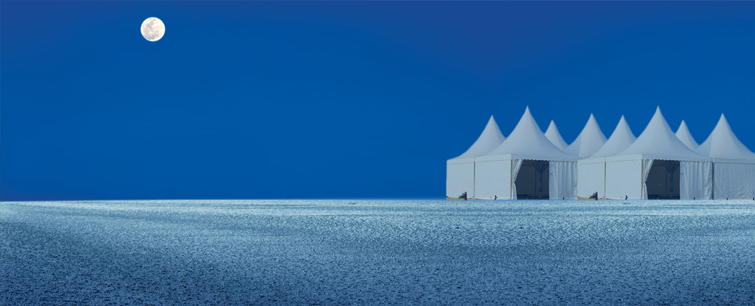
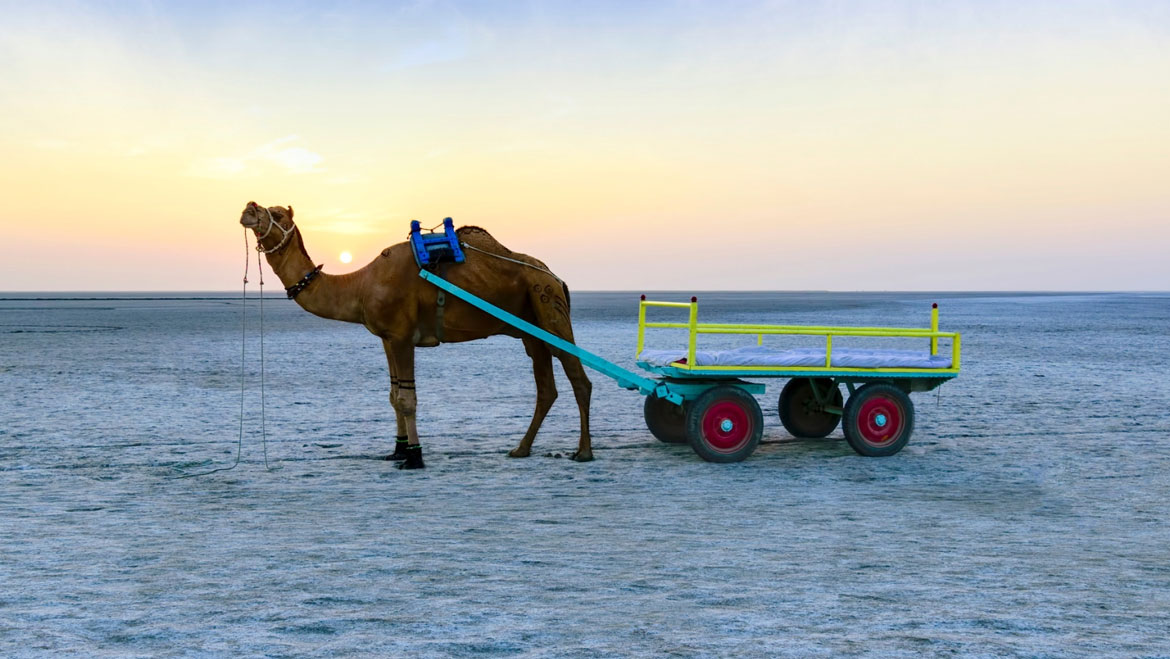
Sprawling in an area of 7000 sq km, White Salt Desert in Great Rann of Kutch is a magical place. Situated about 100kms from Bhuj city, this white desert seems like a surreal place. One can enjoy camel ride here or else a long walk is enough to get one all excited. Local boys can be seen playing cricket here, whereas the couples enjoy walking hand in hand for couple of miles. Watching the sun go down is probably the best thing to do here; the evening shots are simply worth capturing. The ideal time to visit the Great Rann of Kutch would be during the Rann Utsav, a state fair that celebrates the spirit of Kutch region.

Note: Permits are required to enter the desert and the area nearby. Do not forget to carry sunglasses; it will help you see better when the sun is over the head.

Visit Kala Dungar, the Highest Point in Kutch Region

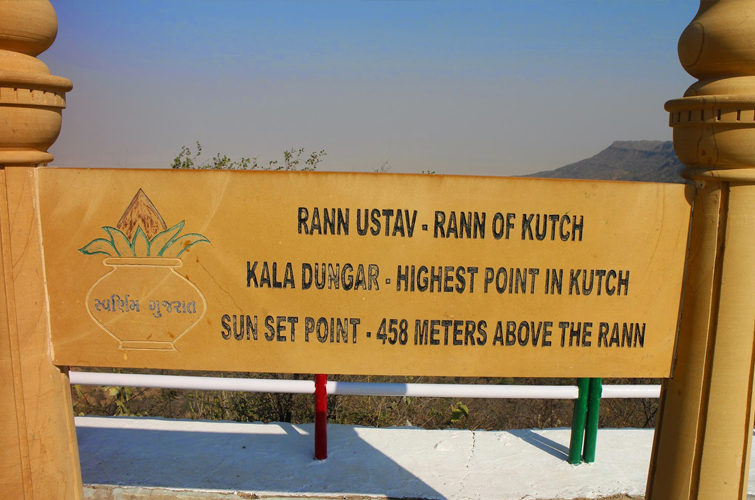
At a short distance from Great Rann White Desert is Kala Dungar. Also known as the Black Hill, it is the highest point of the Kutch region and it offers a panoramic view of the desert. Atop the hill is a Hindu temple known as Dattatreya that dates back to 400 years old. The top of the hill makes wonderful vantage point to get the picture of the Great white desert, which by the way looks like an ocean from this point. Thus, if photography is your main motive that Kala Dungar is a must-visit in the holiday trip to Kutch.


Go Back in History at Kutch Museum at Bhuj

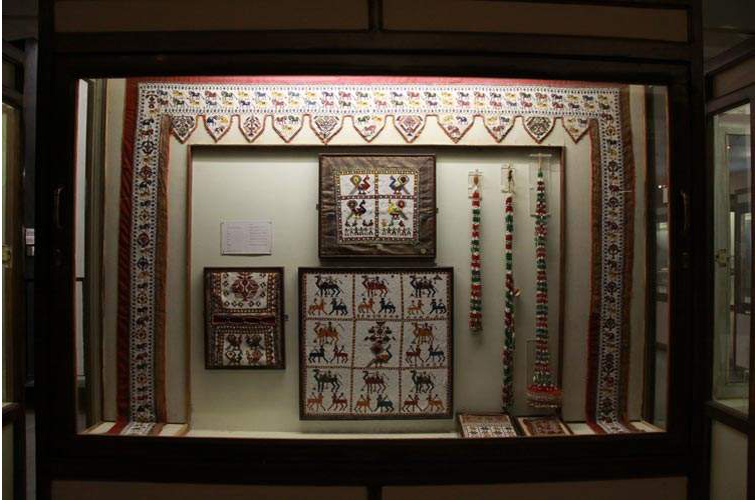
If you are seeking additional knowledge on the history and culture of Kutch region, then the place to visit would be Kutch Museum in Bhuj. Centrally located in the city, Kutch Museum is the oldest museum in Gujarat that was established in 1877. The museum has the largest collection of Kshatrapa inscriptions that date back to 1st century AD. Also, one can witness extinct Kutchi script and an attention-grabbing collection of coins (including the kori, Kutch’s local currency.) A small section of the museum is also devoted to tribal cultures; here ancient artifacts, folk arts and crafts and information about tribal people can be found. The museum exhibits embroidery, paintings, arms, musical instruments, sculpture and precious metalwork that once prevailed in the Kutch region.

Time: 10:00 am to 1:00 am and 2:30 pm to 5:30

Closed: Wednesday, Public Holiday

Entry Fee: Rs. 5

Witness the Rich Heritage of Kutch Region at Prag Mahal and Aina Mahal at Bhuj

Pragmahal Palace Bhuj

Not so far from Kutch Museum are the royal heritages of Kutch region called Prag Mahal and Aina Mahal. The two distinct buildings have the potential to take one back in history. Maintaining its royal look, these palaces are done in Indo-European style of architecture. The Aina Mahal as the name suggests has a hall that is replete with number of giant size mirrors, each done exquisitely whereas, Prag Mahal is known for its Bell Tower and an incredible view of the surrounding from the top. Both the palaces are open for public viewing and has numerous items and photographs that suggests a lavish life of the then ruling family.

Visit Vijay Vilas Palace, the Famed Film Shooting Location in Kutch

Vijay Vilas Palace Kutch

Vijay Vilas Palace is situated in Mandvi, which is about 65kms from Bhuj city. This scenic town was once the hub for ship building industry, however now, it boasts of its rich heritage and beautiful beach. The Vijay Vilas Palace is the highlight of the town and this has also earned it the benefit of being the film shoot location for many bollywood movies; the most prominent being Lagaan, Hum Dil De Chuke Sanam and recent movie R Rajkumar. The palace is a two story building along with Chhatri of Vijayaraji. The view from the terrace of the palace has a panoramic view of the surrounding which is simply beautiful. If you will interact with the one of the care takers, they shall narrate a story or two of the film shoots that have take place here.

Enjoy Camel Ride on Mandvi Beach

Camel Ride on Mandvi Beach

Situated at a short distance from Vijay Vilas Palace is the Mandvi Beach. The beach is often quite and thus is a great place to spend time in solace. However, your unperturbed situation can be disturbed by the people who offer ride on a camel for merely Rs 10 or 20. The deal is not at all bad and therefore their offer should be accepted, as in return of this small sum you can get a pleasant memorable camel ride along the beach. Horse riding is also available at the beach and so is the water scooter ride. While you choose your ride in Mandvi, do not miss out on taking pictures of the pelicans that stroll along the beach as well.

Experience the Interesting Mélange of Religion and Nature at Narayan Sarovar

Narayan Sarovar Kutch

Narayan Sarovar is indeed a must see place in Kutch region. It is a wildlife sanctuary situated in the village Narayansar, which is situated at a distance of about150kms from Bhuj city. The place is most noted for being a holy Hindu ground and is in close proximity to an ancient temple called Koteshwar. Narayan Sarovar or the Lake is amongst the 5 holiest lakes in Hinduism, making it an obvious choice pilgrimage destination in India. The sanctuary here on the other is the home of rich variety of birds and animals; there are about 112 species of residential birds whereas 38 species of migrant birds can also be spotted here along with 14 species of mammals. Since the destination has a good blend of nature and religion, it becomes a place of interest in Kutch.

Trace the Evidences of One of the World’s Oldest Civilizations at Dholavira

Dholavira

Visiting Kutch region gives history lovers a great opportunity to visit ancient sites like Dholavira. This site is considered as the slice of the Indus Valley Civilization/Harappan Civilazation. The ruins throw light on the culture of Harappa and reveal their excellent knowledge of planning and constructing a sound infrastructure. One can find the evidences of well-built harvesting system, network of tanks and sewage system. The ruins here are divided into three zones: the citadel (where the rulers or high officials inhabited), the middle city and the lower city. One very interesting find here is an inscription with 10 large signs, which is estimated to be one of the first evidences of a written language. A small museum located at the entrance of the site houses artifacts that reflect the lifestyle during the Indus Valley Civilisation. One can also see the progression from mud and basic tools to iron and copper implements, gold jewellery and cooking vessels.

Find the Real Beauty of Kutch Culture in its Handicraft Village Tour

Handicraft Kutch

Handicraft is an important part of Kutch life. And while you are in this region, you can take advantage of time and enhance the charm of holidaying in Kutch. There are two villages near the Great Rann White Desert that have recently been in enough limelight. Known as Dhordo and Hodka, these villages are the face of Kutch handicraft (for the record, there are about 32 villages in Kutch region that indulge in the art of embroidery). Visit Dhordo to witness Mutua embroidery, which includes chain stitches inset with small mirrors, leather embroidery and silver jewellery. In Hodka village, the skills of the local Rabari, Meghwal and Maldhari communities can be seen. Apart from the embroidery, Bhungas (huts) can are decorated by the village craftsmen. So, you can expect some interesting visual treats while taking the tour of handicrafts villages in Kutch Region. Apart from Dhordo and Hodka, Sumrasar, Loria, Zura, Nirona,Nakhtarana,Bhujodi, Padhdhar, Dhamanka and Anjar are the handicraft villages in the region.

Dhordo Village Distance from White Desert: 5kms

Hodka Village Distance from White Desert: 22kmst

Witness One of its Kind Indian Wild Ass Sanctuary in Little Rann of Kutch

Wild Ass Sanctuary Kutch

Located in the Little Rann of Kutch, Indian Wild Ass Sanctuary is one of its kind. It is the only place where the Indian Wild Ass or Ghudkar still inhabit. The sanctuary is also the home of 32 mammal species and is an important breeding site for birds. Unlike most of the wildlife sanctuaries in India, this reserve is a desert with parched grasslands that are just right for the animals who reside here. The grassland are said to feed atleast 2100 animals. It can be an out of box experience for wildlife lovers, as this sanctuary differs in several aspects like landscape, flora and fauna for that matter.

If you have already visited Kutch, we’d like you to share your experience with us and other travels BUT if it is still on your bucketlist make sure you cross it off your list by planning a trip here soon.